

· By bedly comfort products
Why Dorm Mattresses Feel So Hard — And How Students Can Fix It
If you’ve ever sat on a dorm mattress and wondered, “Why does this feel like a padded park bench?” — you’re not alone. Dorm mattresses are famous for being stiff, plasticky, and nowhere near the comfort of home. Students complain about them, parents underestimate them, and every freshman learns the truth on move-in day.
So why are these beds so universally uncomfortable?
And more importantly — how do you fix it?
Let’s break it down.
Why Dorm Mattresses Are Always So Hard
1. They’re Built for Durability, Not Comfort
Colleges choose mattresses that can survive years of move-ins, spills, and different students. Comfort is not the priority — longevity is.
2. They Use Dense, Budget-Friendly Foam
Most dorm mattresses use firm, inexpensive foam cores. They don’t contour to your body and offer very little pressure relief.
3. The Vinyl Cover Makes Everything Worse
Many dorm mattresses are wrapped in a waterproof vinyl layer. Yes, it protects against spills — but it also traps heat, removes softness, and produces that “plastic crunch” sound no one asked for.
4. They’re Thin to Save Space and Cost
A thinner mattress is cheaper, easier to store, easier to clean, and easier to replace. Unfortunately, “easy” for schools = uncomfortable for students.
How Hard Mattresses Affect Student Sleep
A stiff mattress isn’t just annoying — it actually makes sleep worse.
• More Pressure Points = More Tossing & Turning
Your shoulders, hips, and back take the hit on extra-firm surfaces.
• Lighter Sleep + Micro-Wakeups
Your body keeps shifting for comfort, which means less deep sleep and more grogginess.
• Neck and Back Tension the Next Morning
Most students feel this around mid-semester… and blame their backpacks instead of their beds.
• Lower Mood, Lower Focus, Lower Energy
When sleep suffers, everything else does too — academics, social life, and overall well-being.
Simple Bedding Upgrades That Actually Fix the Problem
Here’s the good news:
You don’t need a new mattress.
You just need the right upgrades.
1. Add a Supportive Mattress Topper
Not too squishy, not too thick — just enough to take pressure off joints and create real cushion.
2. Keep Your Bedding from Sliding Around
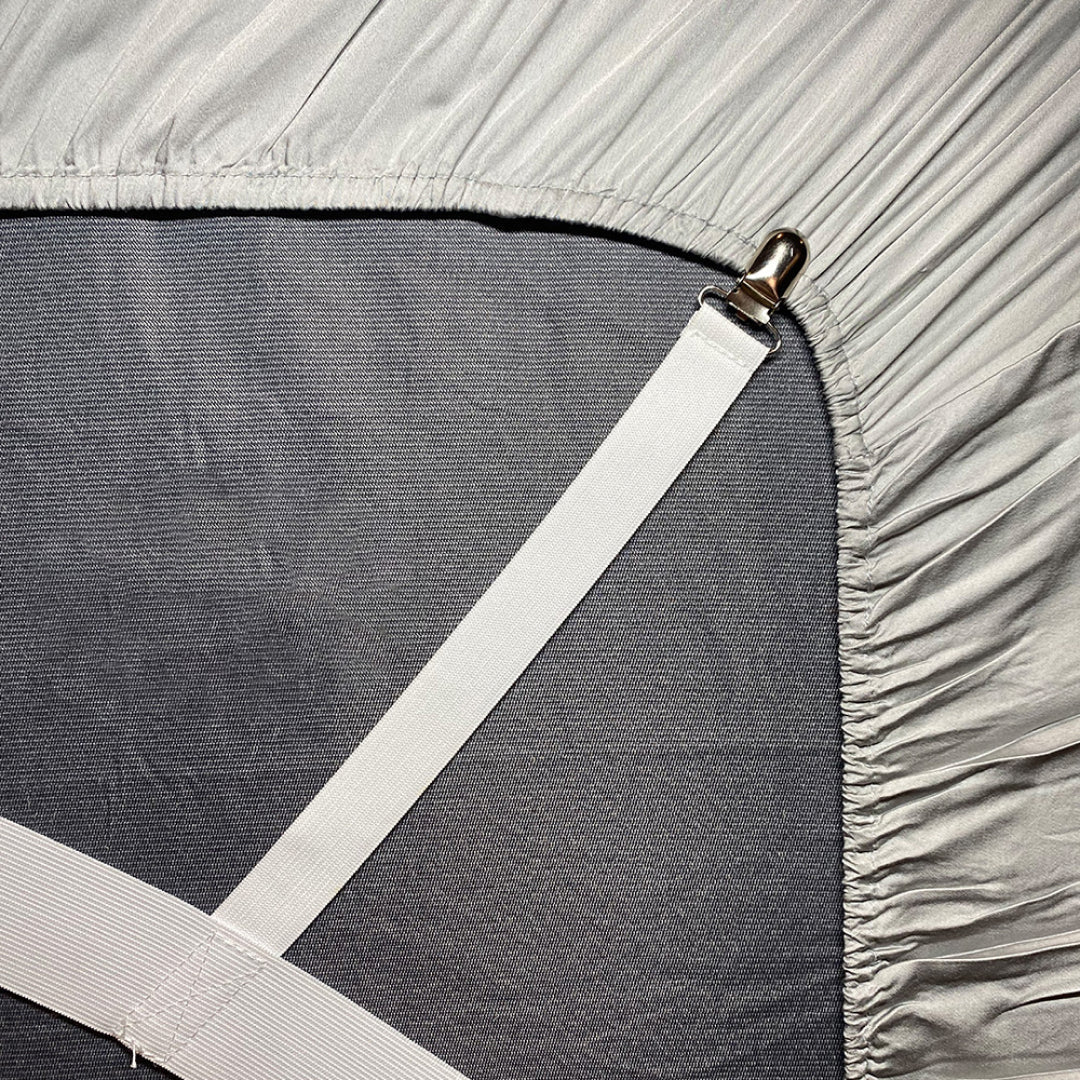
If you toss and turn, your topper shifts and your fitted sheet pops off.
Use Bedly Straps to secure everything tightly so your bed stays stable all night long.
Stability = deeper, uninterrupted sleep.
3. Use Breathable, Soft Sheets
The vinyl mattress cover traps heat.
You need bedding that releases it.
The Bedly Bamboo Bed Set is breathable, cool, and soft — three things dorm mattresses are definitely not.
4. Layer Smart Instead of Heavy
A huge comforter traps heat and causes night sweats.
Light layers + breathable sheets = temperature balance.
5. Upgrade Pillows (This One Matters More Than You Think)
Many dorm sleepers use flat, old pillows.
A proper pillow keeps your spine aligned and helps compensate for the firm mattress.
What Parents Should Know
Parents usually hear, “The dorm mattress is fine, honey.”
It is not fine.
A student’s comfort impacts:
-
Their focus
-
Their recovery
-
Their stress level
-
Their immune health
-
Their academic performance
A few simple bedding upgrades make their sleep, energy, and entire semester noticeably better.
You don’t have to change the mattress — just what goes on it.
Final Takeaway
Dorm mattresses aren’t designed for comfort — but they’re totally fixable. With the right topper, breathable bedding, and a stable setup, students can turn a stiff, plastic-covered slab into a bed they actually want to sleep in.
Better bedding = better sleep = better college life.